

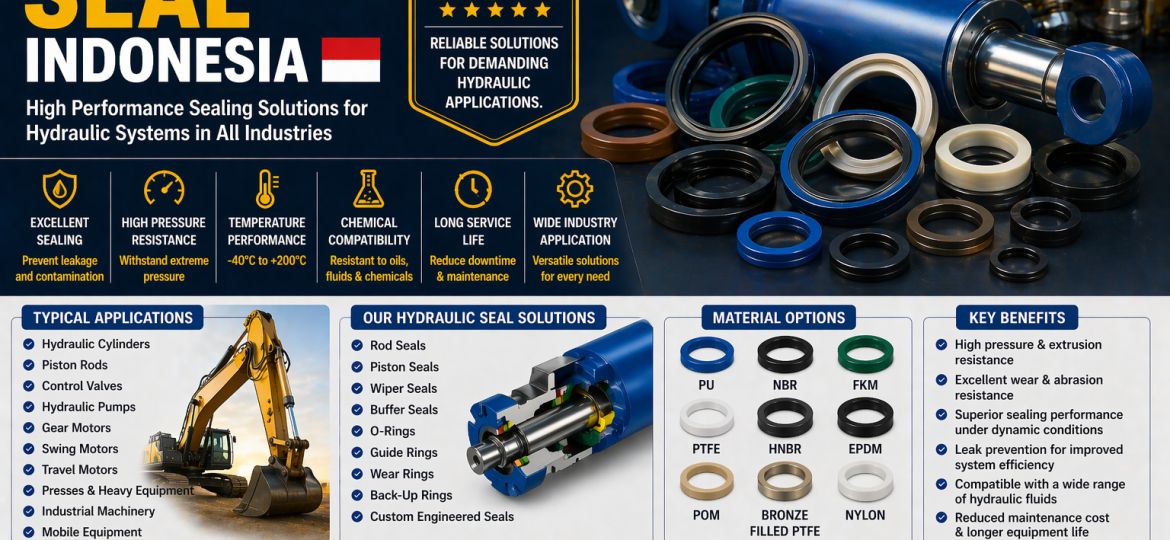
Hydraulic Seals – Indonesia
Overview
Hydraulic seals are essential components used in hydraulic systems to prevent fluid leakage, maintain pressure, and ensure smooth operation of machinery. These seals are designed for both dynamic and static applications, supporting the efficient performance of hydraulic cylinders, pumps, and valves.
In Indonesia, hydraulic seals are widely used across industries such as oil & gas, construction, mining, manufacturing, marine, and agriculture. They play a critical role in maintaining system efficiency, reducing downtime, and extending equipment life in demanding environments.
Key Features
- High Pressure Resistance
Designed to operate under high hydraulic pressures while maintaining sealing integrity. - Leak Prevention
Ensures effective containment of hydraulic fluids, minimizing leakage and contamination. - Wear & Abrasion Resistance
Built to withstand friction, heavy loads, and harsh working conditions. - Temperature Stability
Performs reliably across a wide temperature range, including extreme environments. - Chemical Compatibility
Resistant to hydraulic oils, lubricants, and industrial fluids. - Low Friction Performance
Enhances system efficiency by reducing energy loss and component wear.
Applications
Hydraulic seals are widely used across Indonesia’s industrial sectors, including:
- Hydraulic cylinders and actuators
- Construction and mining equipment (excavators, loaders, cranes)
- Oil & gas machinery and offshore systems
- Industrial presses and manufacturing equipment
- Marine and shipbuilding applications
- Agricultural machinery
These seals ensure smooth operation, pressure control, and long-lasting performance in both mobile and stationary hydraulic systems.
Types of Hydraulic Seals
Rod Seals
Prevent fluid leakage from inside the cylinder to the external environment.
Piston Seals
Maintain pressure between the piston and cylinder bore, enabling efficient movement.
Wiper Seals (Scrapers)
Protect the system by preventing contaminants such as dust, dirt, and moisture from entering.
Wear Rings (Guide Rings)
Guide moving components and prevent metal-to-metal contact.
O-Rings
Versatile seals used in both static and dynamic applications.
U-Cups & Lip Seals
Provide efficient sealing in reciprocating motion with low friction.
Materials Used
Hydraulic seals are manufactured using advanced materials tailored to operating conditions:
- NBR (Nitrile Rubber) – Suitable for general-purpose applications
- HNBR – Enhanced resistance to temperature and chemicals
- PU (Polyurethane) – Excellent wear resistance and durability
- PTFE (Teflon®) – Low friction and superior chemical resistance
- FKM (Viton®) – High temperature and aggressive fluid resistance
- EPDM – Suitable for water-based hydraulic systems
Material selection depends on pressure, temperature, and fluid compatibility.
Benefits
- Improved system efficiency and performance
- Reduced leakage and maintenance costs
- Extended equipment lifespan
- Reliable operation in harsh environments
- Lower downtime and operational expenses
Why Choose Hydraulic Seals in Indonesia?
Indonesia’s industrial and oil & gas sectors operate in challenging environments, including offshore, mining, and heavy-duty applications. Hydraulic seals are engineered to:
- Perform under high pressure and heavy loads
- Resist wear, temperature variations, and chemical exposure
- Support reliable operation in demanding conditions
- Meet industry standards for safety and performance
Conclusion
Hydraulic seals are vital for maintaining pressure control, preventing fluid leakage, and ensuring efficient operation of hydraulic systems. With advanced materials and precision engineering, these seals provide long-lasting and dependable performance across Indonesia’s diverse industrial sectors.